
Interview conducted by Jocelyne Fowler, Artistic Producer
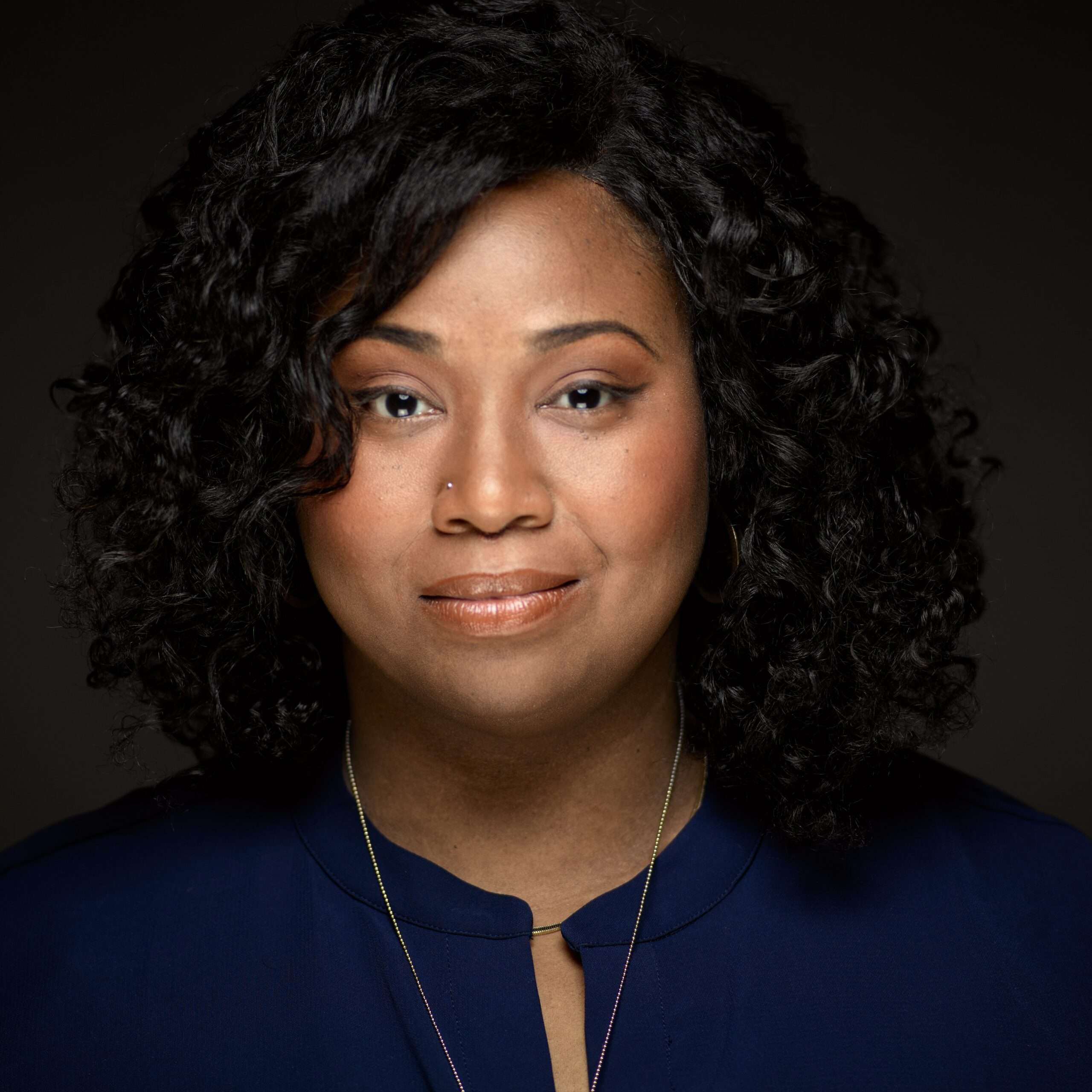
Photo of Shermona Mitchell.
This season, Seattle’s favorite holiday tradition turns 51!
We are so excited to welcome back Shermona Mitchell, who directed last year’s beloved 50th anniversary production.
To prepare for the show, Artistic Producer, Jocelyne Fowler sat down with Shermona to discuss what they’re most looking forward to tackling this year, and what they hope audiences witness whether they’re experiencing A Christmas Carol for the first time or returning for the fifty-first time.
Jocelyne Fowler: Hello Shermona! We are so delighted that you are returning to Union Arts to direct our 51st production of A Christmas Carol. We are also thrilled that your work is featured this season on Table 17! Because of your work last year on the 50th anniversary of A Christmas Carol, we were curious about your approach to this year’s production.
When it comes to working on a production like ACC, which is essentially a hybrid of a remounted design with lighting and sound adjustments, how do you approach the work differently than a new production?
Shermona Mitchell: That’s a great question. I think the biggest difference is that with a remount, you’re not beginning with a blank page. You’re entering into a conversation with what already exists and asking, “What can we discover inside this story now?”
For this production, we’ve been incredibly fortunate to inherit such a strong foundation. Scenic, costumes, and props are largely established, which means we can focus our design conversations around how lighting and sound can deepen the storytelling and illuminate the themes we’re exploring this particular year.
And I actually find that limitation creatively exciting. Instead of asking, “What world are we building?” we get to ask, “How can we reveal something new within this world?”
This year, we’re thinking a great deal about bells and what they represent throughout A Christmas Carol. Bells announce things. They warn us. They celebrate. They call us somewhere. They tell us that something is about to change. So with Evan Moser, our sound designer, we’ve been exploring the different qualities and variations of bells, as well as the voices and other sounds within the production, to create something that can be playful, theatrical, and genuinely haunting. Because underneath everything else, A Christmas Carol is still a ghost story.
With Andrew D. Smith, our lighting designer, we’re similarly looking at how light can help us experience Scrooge’s emotional journey. Where does the world isolate him? Where does it close in? And as he begins to reconnect with memory, possibility, and eventually other people, where can the world begin to open and warm around him?
What is also wonderful about returning to the production is that we have discoveries from previous years to build upon. There are moments we touched last year that we now have the opportunity to investigate more deeply, while still leaving room for entirely new ideas.
Whenever I approach A Christmas Carol, I ask myself: What does this story have to say to Seattle right now? What does it have to say about where we are in this particular moment in history? How can a story that is nearly 200 years old still challenge us, move us, make us laugh, haunt us a little, and perhaps influence the choices we make when we leave the theatre?
That is where lighting and sound become so powerful. When they’re working beautifully, an audience may not consciously think, “The light just became warmer,” or “The soundscape just changed.” But your body knows. You feel the loneliness. You feel the haunting. You feel when the world begins to open.
And that, to me, is the magic of approaching a remount. We’re not necessarily rebuilding the house. We get to walk back into it, open some doors we haven’t opened before, turn on different lights, listen more closely, and discover that there are still rooms in this story we haven’t fully explored.
JF: What are you most excited about when it comes to this year’s production of A Christmas Carol?
SM: I think, first and foremost, I’m always incredibly honored to be asked to direct A Christmas Carol. This production has become such a beloved cornerstone of the holiday season for this organization and for so many people in our community. For some families, coming to see A Christmas Carol is part of how they mark this time of year. To be entrusted with something that holds that kind of memory and meaning for people is something I don’t take lightly.
And this year, I’m especially excited about the people who get to carry that tradition forward.
We have an extraordinary company of artists. There are people audiences will recognize, artists returning to roles or to this community, and people bringing completely new energy and perspectives to the production. One of my favorite things about A Christmas Carol is watching these roles and tracks pass from artist to artist. You may know the character, you may even know exactly what happens next, and then a new actor steps into that role and suddenly you discover something you’ve never noticed before. I love that.
I’m also excited because this is my second year directing the production. The first year, there is naturally a little bit of, “Okay, learn the terrain. Honor the tradition. And please don’t break Christmas!” [laughs]
This year, I know the terrain a little better. And that familiarity gives us permission to be curious in a different way. We can ask: What did we discover last year that we want to deepen? What haven’t we investigated yet? What does this particular group of artists reveal about the story that no other company could?
Because that’s the wonderful thing about tradition. Tradition doesn’t have to mean doing something exactly the same way every year. It can mean returning to something we love and discovering why it still matters.
I really love this company. There is such generosity among them. They enjoy one another, they take care of one another, and they understand the responsibility and the joy of telling this story again and again throughout the holiday season.
So I think what I’m most excited about is simply being in the room with these artists: their talent, their generosity, their curiosity, and their passion for storytelling. We get to inherit this extraordinary tradition for a little while, make it ours together, and then share it with Seattle.
That feels pretty magical!
JF: Are there any challenges from last year’s production that you are interested in navigating in a different way?
SM: Absolutely. I think every director knows that feeling when a production finally opens and you suddenly think, “Oh, dang it. I missed that moment,” or, “I wish I’d had just a little more time to explore that.”
Theatre is such an immediate art form. At some point, the show opens, the work is handed over, and you have to let it live. So it’s actually a tremendous gift to have the opportunity to come back to a production and say, “Okay, what did I learn? What do I understand differently now? And where can we go a little deeper?”
There are certainly moments from last year that I’ve carried with me where I thought, “I know how I’d like to develop that,” or “I’d love to investigate that relationship or transition a little more.” And now we actually get to do that.
But I also don’t want to approach this year as simply correcting last year. That wouldn’t leave enough room for discovery. We have different artists in the room, different energies, and frankly, we’re living in a different moment. All of those things are going to reveal something new about the story.
That’s one of the great luxuries of returning to a piece. You have the benefit of experience without having to sacrifice curiosity.
And we so rarely get that opportunity in theatre. Usually, once it’s gone, it’s gone. So if somebody gives you another chance to get into the sandbox, you play while you can, right?
JF: What are you hoping the audience takes away from this production?
SM: That’s another excellent question. I’m always fascinated that, nearly 200 years later, we are still gathering together to tell this ghost story. We know what happens. We know who Scrooge is. We know the ghosts are coming. And yet, year after year, people return and say, in some way, “There’s still something in this story that I need.”
I love that.
And I don’t know that I want to decide what that “something” should be for everyone.
A Christmas Carol is almost its own little treasure map. Depending on where you are in your life, you may discover something completely different within it. Maybe it’s a story about redemption. Maybe it’s about the possibility of change. Maybe it’s about repairing relationships, being present while we still have the opportunity, or recognizing that none of us exists outside of community.
Maybe it’s simply the reminder that being alive is an invitation to participate.
There’s so much in this story about the past, present, and future, but ultimately, I think Dickens keeps bringing us back to the choices we make right now. We cannot change every moment that came before us, and we cannot completely control what comes next. But we can decide how we show up today. We can choose connection. We can cultivate relationships. We can notice who needs us. We can fight for one another. And, like Scrooge, we can decide that who we have been does not have to dictate who we become.
That’s what I hope audiences carry with them.
Because I love theatre, obviously. I’ve made some fairly significant life choices around that fact! [laughs] But I also believe storytelling becomes most powerful when something travels with us beyond the theatre.
So whatever you discover in this particular telling, I hope it moves you toward something. Call somebody. Forgive somebody. Check on somebody. Celebrate somebody. Show up for your community. Give where you can. Fight for someone you refuse to give up on. Maybe even extend a little grace to yourself.
You don’t have to leave the theatre and become Ebenezer Scrooge on Christmas morning. That’s a fairly ambitious evening of theatre.
But if this story makes us a little more awake to one another, a little more willing to participate in our communities, and a little more hopeful about our capacity to change, then I think this nearly 200-year-old ghost story has done its job once again.